
Andrew Leslie: My local mountain, my Everest
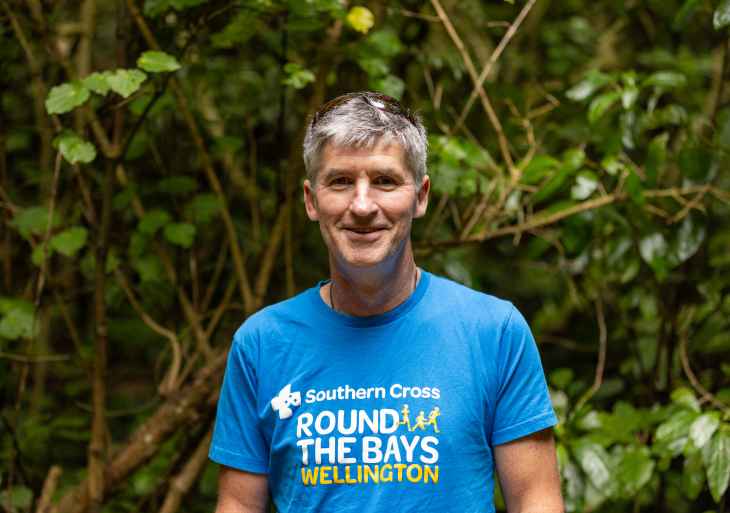
In 2020, Wellington man Andrew Leslie broke his neck in a mountain-biking accident. Six years later, he's completed a remarkable feat to share an important message.





The last time I climbed to the top of Mount Kaukau, I stumbled over the final few steps. I didn’t fall – though I came close – and I didn’t care much if I did.
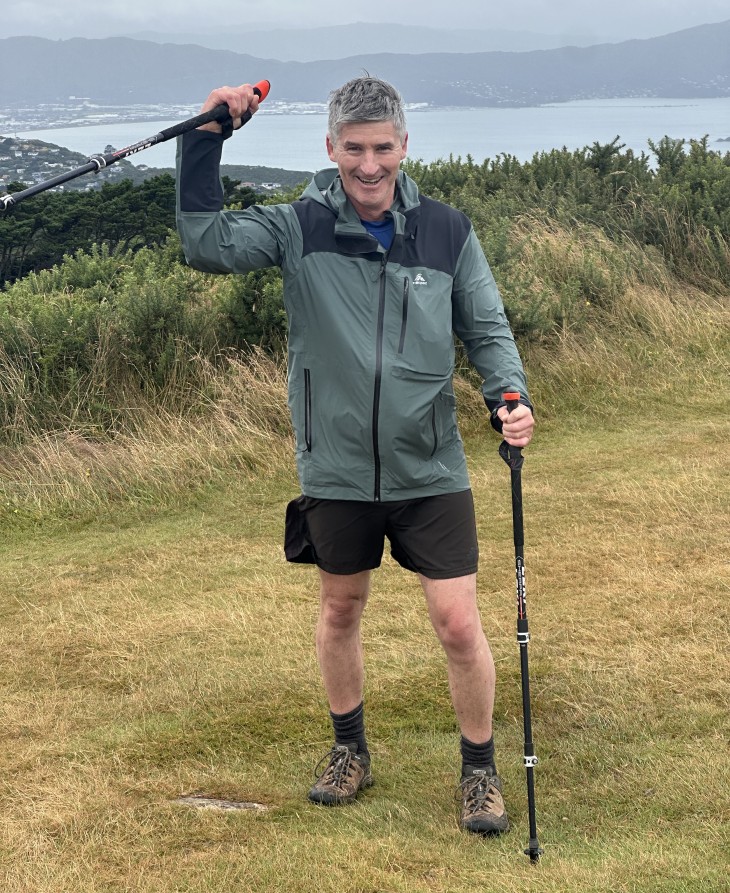
When I reached the top, there were hugs, high fives, a few tears and a quiet sense of relief. After 35 climbs in a year, I’d finally knocked the bastard off. Everest, that is.
Not the snow‑covered mountain in the Himalayas, but my local Wellington equivalent.
Thirty‑five trips up Mount Kaukau, climbing 259m of elevation each time from the car park at Khandallah Park. Do the maths and it adds up to the same vertical climb as Mount Everest.
I liked the symmetry of that. Sir Edmund Hillary might have raised an eyebrow, but I’ll take it.
Six years ago, the idea that I’d ever walk up Mount Kaukau again – let alone 35 times – would have sounded absurd.
The accident that changed everything
In 2020, I broke my neck in a mountain‑biking accident at Mākara Peak.
I damaged my spinal cord and became a tetraplegic. I spent time in intensive care in an induced coma while my family were told to prepare for me being in a wheelchair for the rest of my life.
That wasn’t a reality I was ready to accept.
Recovery, I learned quickly, isn’t linear. It’s not heroic either.
It’s slow, frustrating, repetitive and often boring.
In fact, I don’t even think about recovery anymore because you never recover from a spinal cord injury. Instead, it’s an incredibly complicated learning process.
It’s learning how to do the basics again. It’s finding out what still works, what doesn’t, and what might, if you give it time.
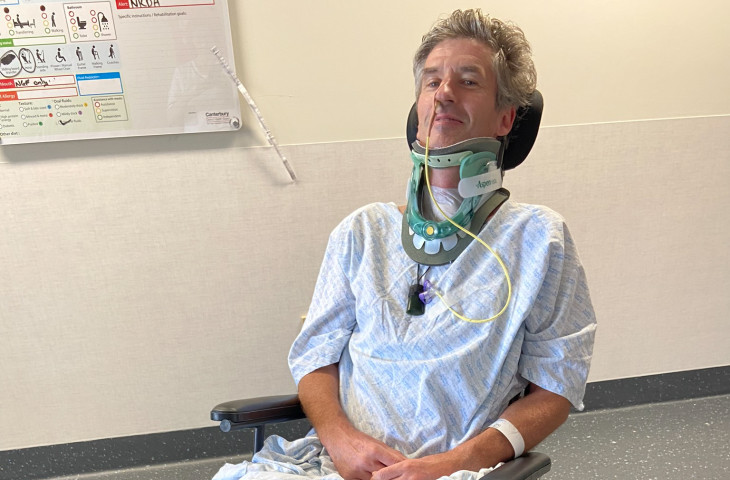
'ACC has been a plank in my recovery'
With a lot of support – and I mean a lot – I walked out of the Burwood Spinal Unit five months later.
ACC has been a real plank in my recovery, backing me every step of the way. They have helped me return to work and get back to independence. There’s so much I simply couldn’t have done without that support.
Each year since my accident, I’ve marked the anniversary with a physical challenge. Not because I think everyone should do that, but because it gives me something to aim at.
In 2021, I walked back to the site of my accident. A year later, I taught myself how to run again and did a 5km loop of Karori Park with my sister. Then I completed an Outward Bound course in 2023.
The following year, I walked the Abel Tasman Coast Track with my good mate George Thompson – another tetraplegic I met at Burwood.
There’s something powerful about being in the outdoors, in places that remind you how small you are and how capable you can still be.
This year, I wanted something closer to home. Something that would force consistency, not just courage.
Mount Kaukau fitted the bill.
It’s not an easy walk. It winds through bush, has lots and lots of stairs and rocky sections, and then gets properly steep near the top.
Doing it once is satisfying. Doing it 35 times makes you confront your limits – physical and mental – over and over again.
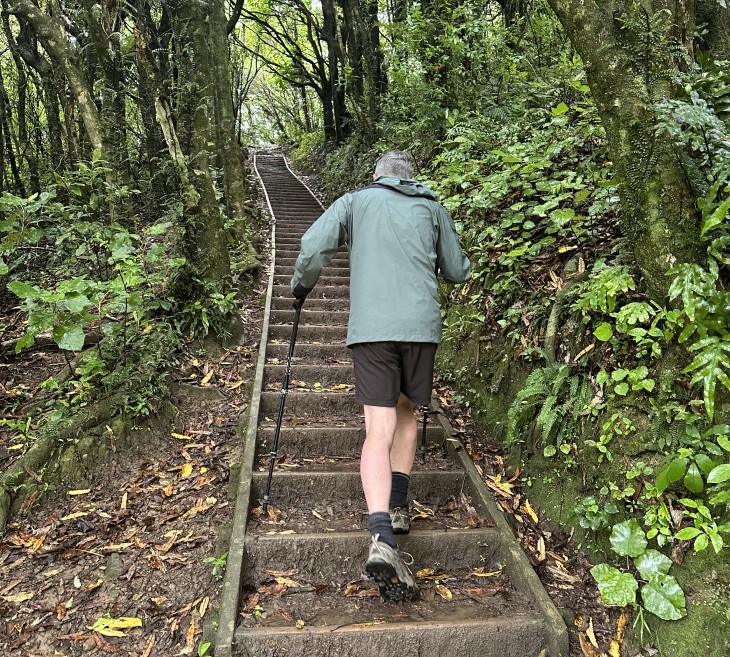
Living with a life-changing injury
I’m a goal‑oriented person.
I like pushing beyond my comfort zone.
But I’m also very aware that everyone who lives with a life‑changing injury is on their own path. There’s no single definition of success, and no universal timeline.
If I have any advice, it’s this: keep going, in whatever way makes sense for you.
Find the thing that gives you joy or purpose.
Small, incremental improvements matter. They build independence, confidence and, ultimately, a fulfilling life.
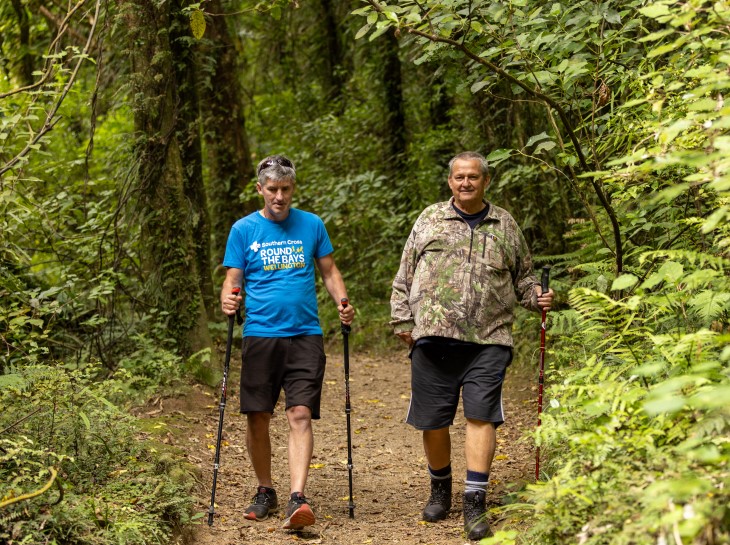
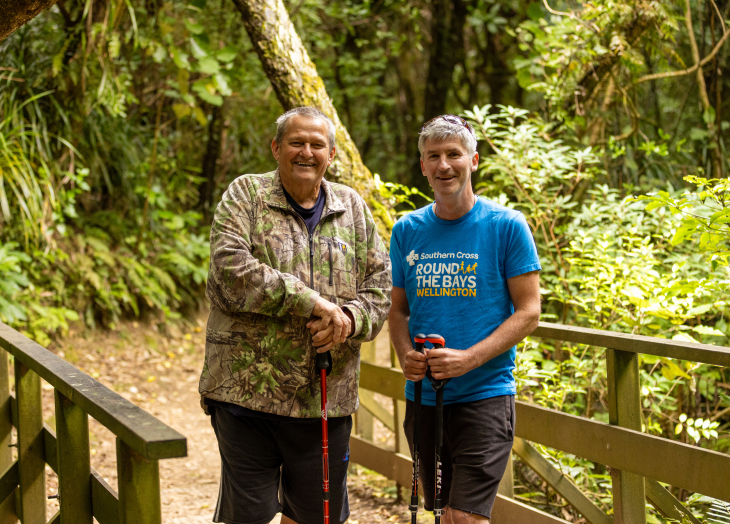
Andrew Leslie walking with his good friend George Thompson.
Making the outdoors accessible
There was another reason this challenge mattered to me. I work in the physical activity and wellbeing sector, and last year we released the Outdoors Accessibility Design Guidelines – a piece of work I’m incredibly proud of.
One in six New Zealanders lives with a disability. Access to the outdoors shouldn’t be a privilege reserved for the lucky few.
In Aotearoa, we’re surrounded by extraordinary natural spaces. Everyone deserves the chance to connect with them, to build a relationship with te taiao, and to experience the physical and mental benefits that come with that connection.
I want to do what I can to help other disabled New Zealanders access the outdoors in ways that are going to work for them.
Standing on top of Mount Kaukau for the 35th time, looking out over Wellington, I didn’t feel like I’d conquered anything. What I felt was gratitude – for the people who’ve supported me, for the systems that worked and for a body that, while changed forever, still carries me forward.
Everest isn’t always a far-off mountain. Sometimes it’s the one in your own backyard, climbed slowly, stubbornly, and one step at a time.