
Ellen Snelling: Making surfing accessible
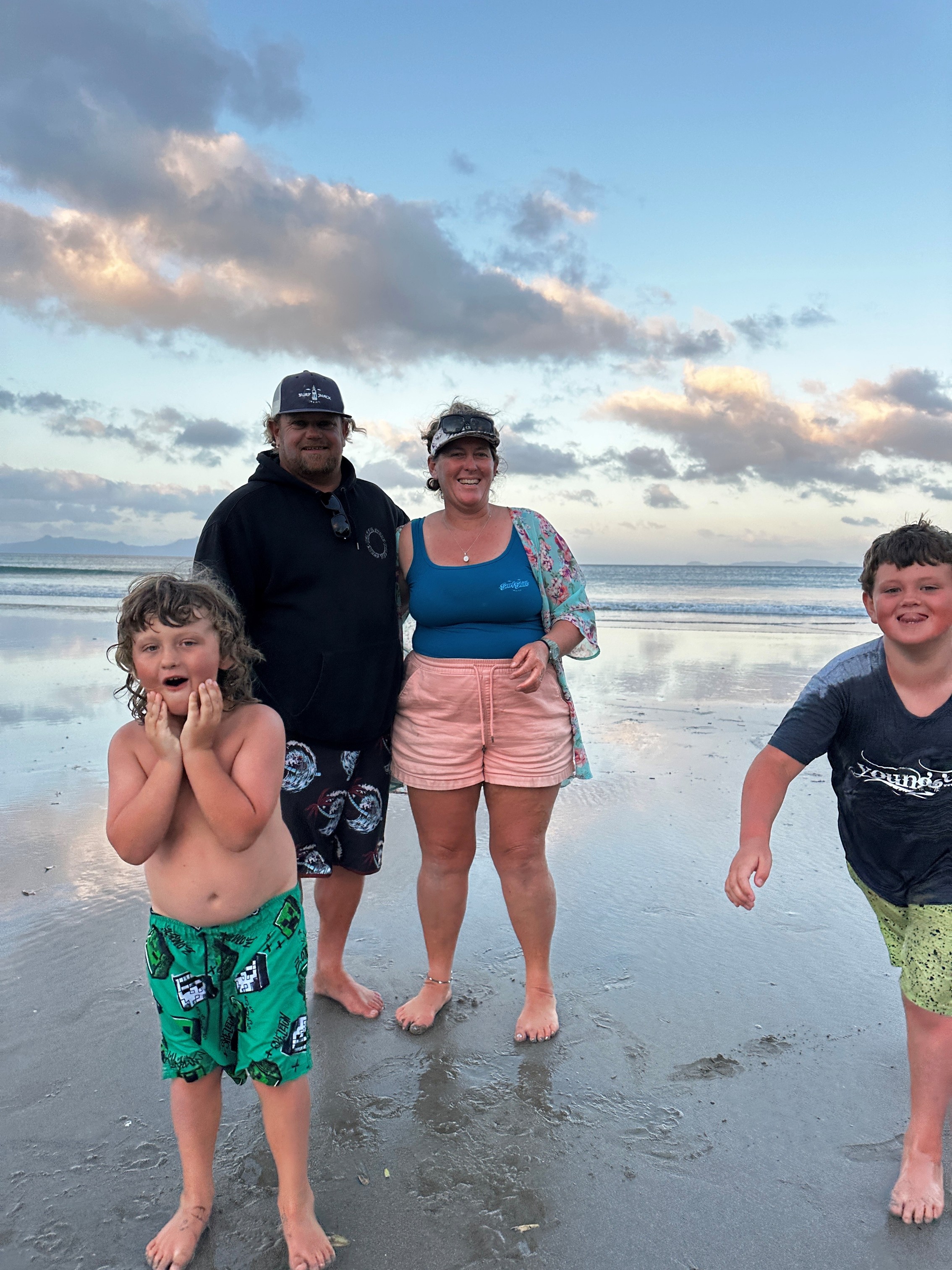
West Australian Ellen Snelling is now an adopted Northland local, and runs the Learn 2 Surf School at Waipu Cove with her partner, Grae. Ellen talked to us about the deeply personal experiences that motivate her.





When Ellen and Grae Snelling first arrived at Waipu Cove, they thought they’d stay for just a year. But a decade later, the beauty of the Northland coastline, the warmth of the local community, and the steady rhythm of the waves have made it home.
Ellen grew up by the ocean in remote southwest Western Australia, though surfing wasn’t part of her early life. “Not many girls were into it,” she recalls. As a teenager, surfing was viewed as a “guy sport,” and most of her friends chose netball or other activities. Surf culture felt distant and heavily male dominated.
Everything changed after a car accident at 18. Ellen, a passenger, suffered a serious back injury that left her unable to walk or even sneeze without pain for nearly a year.
“It was a pretty big deal, even though the injury wasn’t classified as major,” she says. “I was very lucky to have had the operation. It was life changing – I pretty much got my life back.”
During rehabilitation, Ellen took up swimming. That led her to a new group of friends—women keen to try surfing. “I just kind of had a go because a bunch of other girls were surfing, and I thought, ‘Oh yeah, I’ll at least try.’”
That tentative beginning grew into a passion. “I’m quite an adventure seeker, so it became a way of having that adventure without putting myself in precarious situations.”
But the journey wasn’t only physical. Surfing was—and often still is—a male dominated sport.
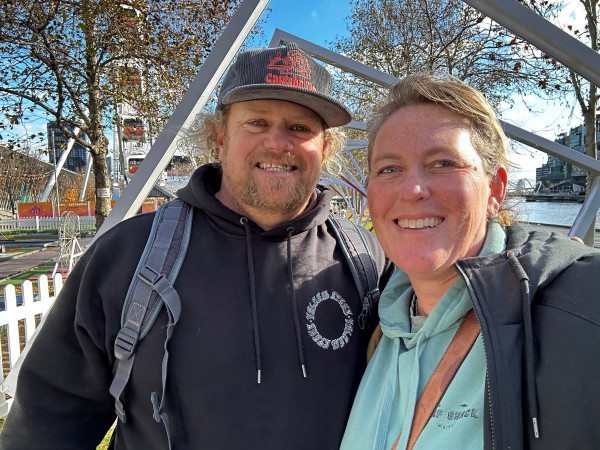
Ellen and Grae Snelling
Surfing for all
“If you paddle out and there’s 20 guys and two girls, it can be quite confronting,” Ellen says. “It can be challenging to feel confident in that situation.”
Both she and Grae want to help change that. Through their Learn 2 Surf school, they focus on encouraging young girls to give surfing a go. Over the past 30 years, Ellen says she has seen progress. “A lot of the pro women surfers were still fighting for equity and pay and prize money and sponsorship. That’s been quite a recent change.”
Waipu Cove, she says, is different from many surf breaks around the world.
“There are so many women who surf here. It’s not uncommon to go out and have five or six women in the water, which isn’t common in a lot of places.”
This strong sense of community and inclusiveness is a big part of what makes the area special.
Grae’s family is from the region, and after a short stay, the couple fell in love with the place. Grae grew up surfing the Whangarei Heads coastline—mostly at Ocean Beach and Pataua.
“We came for a year, and then 10 years later, we’re still here,” Ellen says, laughing. The couple bought the local surf school and settled in, drawn by the safe beaches and supportive community.
“I’ve coached in many different places around the world, and Waipu has to be one of the best. It’s a very safe beach, and the community makes a big difference.”
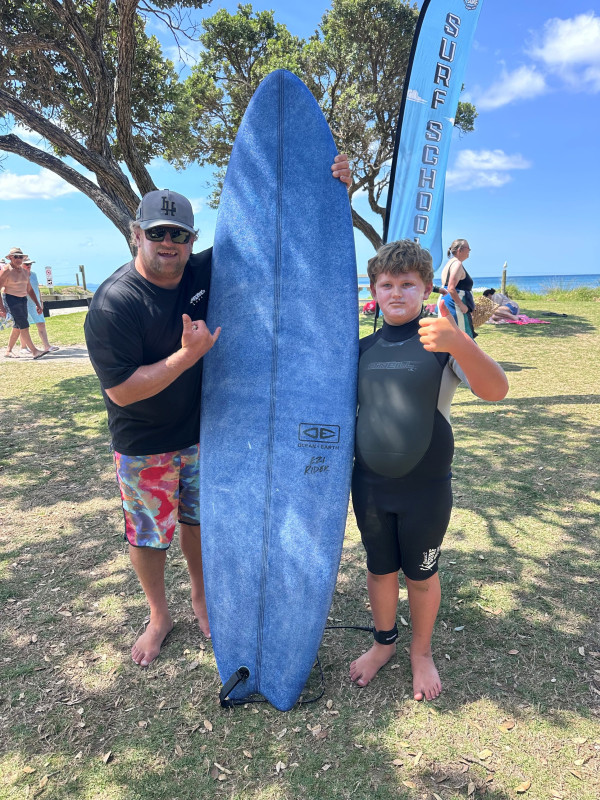
Grae and Kalani Snelling
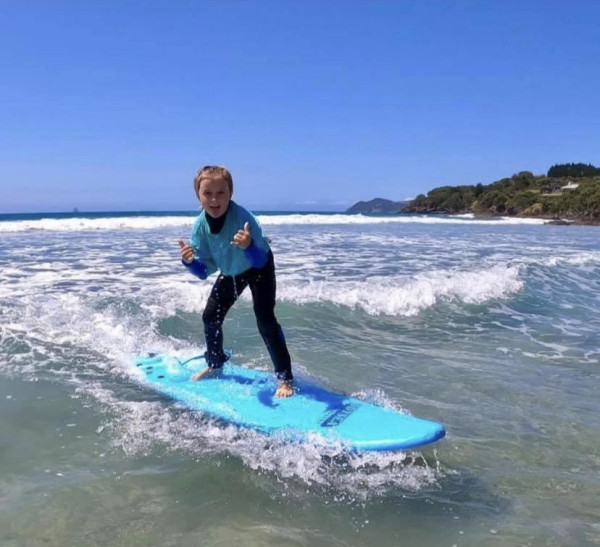
Learning from experience
Safety is at the heart of their coaching. Every session begins with a conditions assessment.
“Anyone who has spent time in the ocean knows it demands your utmost respect and each day it changes,” Ellen says.
Ben Kennings, chief executive of Surfing New Zealand, says there are more than 300,000 recreational surfers in Aotearoa. Surf schools play an important role in introducing people to the sport, and he emphasises the importance of surfing at your skill level.
“Surfing is awesome, but we need to acknowledge our sport does have its dangers. It’s about knowing how to minimise the risks, and that comes with experience.”
Ellen knows firsthand how quickly things can go wrong. While surfing in Lombok, Indonesia, she once received 14 stitches after her board snapped back and hit her in the face.
“I thought I'd knocked all my teeth out. I put my hand up on my face and there was blood everywhere. It was pretty scary.”
Her own experiences, along with helping rescue an injured surfer with a broken back, fuel her passion for safety.
“All of that accumulates to us being passionate about helping others avoid the mistakes we’ve made.”
Surfing is the leading cause of water related injuries in New Zealand. In 2024, ACC accepted nearly 6,000 surfing related injury claims, costing over $15 million.
ACC injury prevention leader James Whitaker, a longtime surfer, says even experienced surfers can misjudge conditions.
“The ocean is beautiful and provides a lot of joy – but it’s also bigger and more powerful than any of us and needs to be respected.”
Whitaker says all surfers need to take a moment before getting in the water.
“Monitor the conditions and the risks before you get out there and then take the safest options. If you’re in doubt, finding something else to do might be the best option.”
Ellen and Grae say the same to newcomers: “If you’re not sure, ask. There’s always someone on the beach who knows the waves. Spend a little time assessing the beach before you go out. Don’t just rush in.”
For Ellen, teaching others to surf never loses its magic.
“It’s the most amazing privilege to help someone on their journey. Some people fall in love with it, others just enjoy it as a holiday activity. It doesn’t matter—it’s about providing a fun experience.”