
James’ story: Low tide, high stakes on the waves
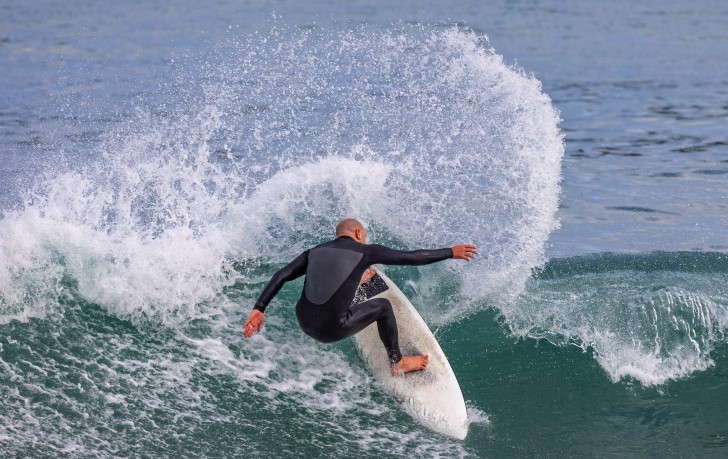
Our injury prevention leader James Whitaker encourages people to ‘Have a hmmm’ every day. An experienced surfer, he still sometimes gets humbled by the power of the ocean and is sharing his story to help others this summer.





It started like many other surfs I’ve been lucky enough to enjoy.
It was a mid-winter morning around 7am. I crossed the road, traipsed along the grassy knoll surrounded by pōhutukawa, through the split in the hill, then down to the rock pools.
When I got to the rocks, I could see the tide was unusually low.
After snapping a board out there a while ago, I used a stone to etch a line on a tall rock in the rock pool. The line indicates when there’s sufficient water above the reef to cushion a fall.
The water line was well below my safety marker but this was my only chance to get out there that day.
The surf was up, water was glassy and the sun had just started to rise – with rays bursting through the nooks and crannies of the ranges towering above the sea.
Despite my role as an injury prevention leader, I couldn’t resist it.
I observed the conditions for a while to get a good understanding of the gaps between sets (moments when larger waves occur) and to mind-surf my approach.
A short paddle through the keyhole and I was out there, right in the take-off zone.
A little set came, I committed and scored a beautiful little wally one that peeled quickly above the reef.
Then another, and another. I was feeling on top of my game – like I had it all under control.
Head-first into the rocks
I then saw a significantly larger set forming way out to sea.
It started to peak out at a distant bombora (sea waves breaking over a shallow area) and that’s when I knew this one was going to be different to the others.
In my over-excited state, I forgot all about the lower tide and paddled straight out further to meet the wave that was already super steep and starting to pitch over.
As I was on a roll that morning, I felt I’d be able to make the steep drop.
It was coming at me quickly, so I turned, dug in deep with a couple of strokes, and I was off.
Next thing you know I was flipped, my leash snapped, and I was slammed head-first into the rocks that help to form this beautiful wave.
I quickly scrambled for my board, got on it, and paddled for shore.
As soon as I made it to the sand, I was immediately overcome by two thoughts:1) I was super lucky to be alive and 2) I should have known better.
My helmet protected most of my head but I still copped a couple of nasty gashes – one to my forehead and one to my nose. I could have lost an eye, or worse.
I also copped a lot of flak from family, friends and workmates who have all quite rightly asked me if I had a ‘hmmm’.
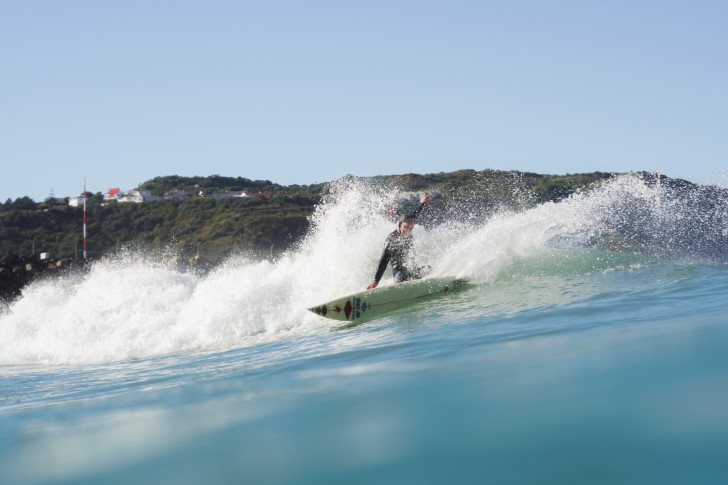
The need to ‘Have a hmmm’
This break (my local) is a challenging one, but it offers surfers a great thrill.
I’m usually very calculated in my approach and do ‘Have a hmmm’ before I get stuck in.
My usual checklist goes a bit like this:
1. Surfing helmet
2. Correct swell direction (to ensure it’s breaking on the ideal angle – away from the sketchiest rocks and into the channel)
3. Not too windy (a hard onshore and the place is relentless, in extreme offshores the drops are way too steep/late and unforgiving)
4. Sufficient swell (so it’s breaking well before the shallowest part of the reef) but not too big/out of control
5. Is there sufficient water over the reef/has the tide filled in enough?
Numbers one to four were all good, but my experience proved I should have followed my instincts, paid attention to point five, and given it a miss.
With a bit of hindsight, it’s clear by going out at low tide I was putting my life on the line. I was also using a type of board I’d never used before – this always makes things a bit trickier.
‘I could’ve lost what’s most important’
When I was getting patched up at my local medical centre, a whole lot of ‘could haves’ rushed through my mind.
I could’ve lost an eye. I could’ve been concussed. I could’ve lost my ability to surf, work or do all the other things I love.
More importantly – I might not have been there for my wife and daughters.
Sounds dramatic, but it’s all true.
I’m lucky I got away with a solid humbling and an ugly Harry Potter-like scar.
Surfing offers incredible experiences. It gives me something to look forward to, emotions ranging from a sense of calm through to adrenaline highs, a strong connection to nature and a great community to belong to.
But surfing is the leading cause of water-related injuries in New Zealand.
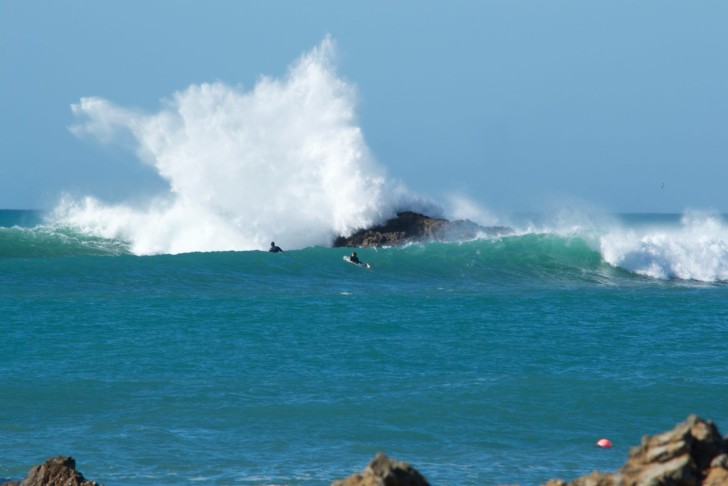
Staying safe in the waves
In 2024, ACC accepted almost 6,000 surfing injury claims which came at a cost of over $15 million to help people recover.
If you’re keen to enjoy everything surfing has to offer it pays to follow these tips:
- Check it before you charge it – take it easy on your first rides until you’ve worked out how shallow it is and identified any other hazards (crowd, close-out sections etc)
- Surf in conditions that match your ability – if in doubt, don’t go out
- Give others plenty of room – if they’re up and riding, leave them to it
- Always wear a leg rope/leash
- Stay with your board – it’s an awesome flotation device
- Cover your head when you fall off – it happens to everyone, regardless of ability, so it pays to do what you can to prevent head knocks, cuts and concussion