
Julie’s story: ‘You don’t plan for these things’
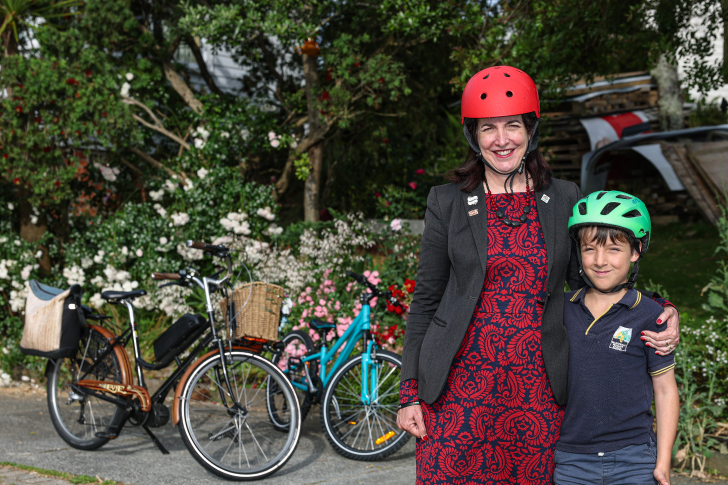
After being hit by a car while cycling, Julie Fairey is still going through months of recovery. She’s keen to get back on her bike but is urging all road users to ‘Have a hmmm’ and help reduce cycling injuries.





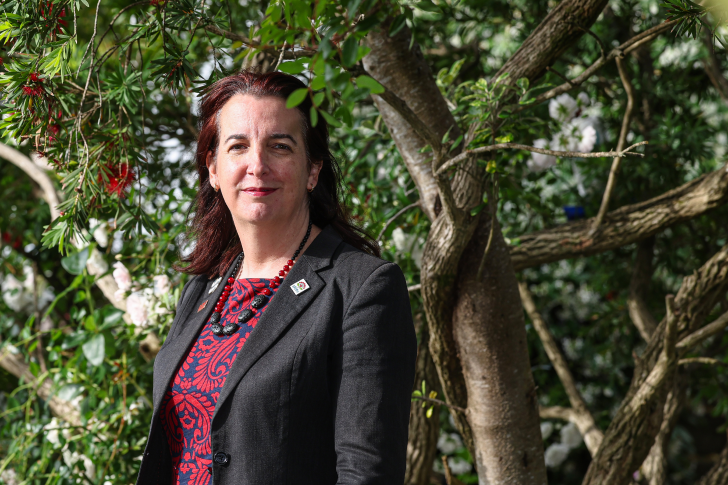
Councillor Julie Fairey has spent much of her political career advocating for safer, more connected streets in Auckland. But when a driver cut a corner near her home and struck her e-bike, that work suddenly became personal.
“I was 30 seconds from home,” she says.
“I was waiting to turn right onto Dominion Road extension, inside the white lines. A driver was turning right into the street I was coming out of, and he didn’t see me. He cut the corner, the car hit the bike and threw me off, and I broke my leg.
“He made a mistake, and who hasn’t made a mistake driving? But it’s had really big consequences for my family and I.”
The impact split the bone just below her knee. Weeks later, complications set in.
Blood clots formed in her leg, travelled to her lungs, and caused a pulmonary embolism that left her seriously ill and confined to bed for days.
“It’s been months now and I’m still not fully recovered,” she says.
“The bones have healed but the muscles are still weak. There’s a lot I still can’t do – even kneeling is painful.
“If it had just been the broken leg, I’d probably be fine by now. But because of the embolism, I wasn’t allowed to exercise for so long. Everything takes longer to rebuild.”
‘You feel like a burden’
The weeks after the crash were a blur of pain, paperwork and unexpected dependency.
Julie, normally a fiercely independent figure in local government, suddenly couldn’t carry food, walk unaided, or even shower on her own.
“ACC were amazing,” she says.
“They provided a walker, and later someone to come in at lunchtime to make food and help me move between rooms. I couldn’t carry anything, not even my laptop, so they’d shift it from the kitchen table to the lounge for me.”
Crutches didn’t work because the brace on her leg was locked straight, forcing her to hop unsteadily on one foot.
Getting to the bathroom was difficult and showering required her husband’s help.
“I could manage on my own most of the time, but when I was on bed rest after the embolism, I had to use a bed pan for four or five days,” she says.
“We’ve got three kids, and my husband has a busy job, sometimes away for work. So sometimes I’d have to wait several days for a shower.”
Her mother’s apartment, designed for people with mobility issues, became her refuge.
“Mum’s place had wide corridors, a lift and a shower I could use. It made such a difference but you still feel like a burden. That’s the hardest part.”
‘The everyday things get to you’
Five months on, Julie is still recovering. She can drive, but she can’t yet cycle or run – even short sprints to catch the bus are impossible.
“I missed a bus the other day because I couldn’t run across the road in time,” she says.
“Ordinarily I’d have made it, but I had to wait for the next one. I ended up half an hour late. It sounds small, but it’s those everyday things that get to you.”
Despite everything, Julie insists she’ll ride again.
“For me, cycling is the best way to get around. It helps my physical and mental health, it’s efficient and it connects me to my community,” she says.
“This is the only time I’ve been hit by a car in all my years of cycling. And no one ever says to a driver after a car crash, ‘Will you drive again?’”
She describes her custom-built e-bike like it’s part of the family.
“When you ride, you feel connected. You can smell dinner cooking, hear kids playing, say hi to people on the street. In a car, you’re in a box. You’re separated from all that.
“Cycling feels human, and it’s like the closest thing to flying while you’re still on the ground.”
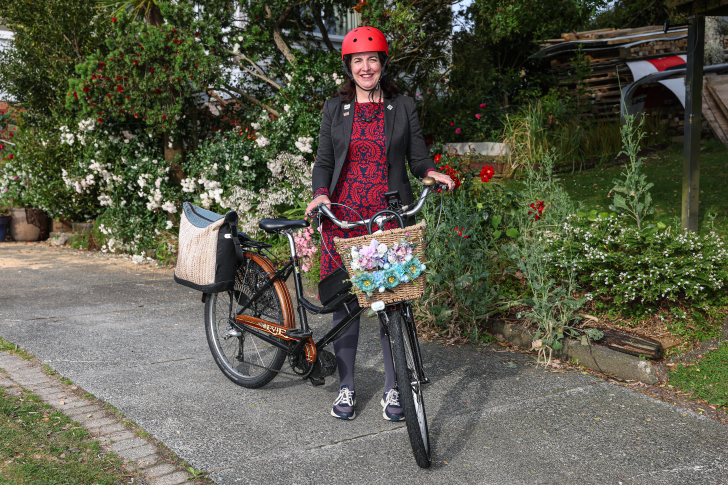
The cost of cycling injuries
In 2024, ACC helped people recover from more than 31,000 cycling-related injuries across New Zealand. It cost $115 million to help people recover from these injuries – the highest cost over the past five years.
Research shows car drivers are at fault in 90 per cent of accidents at urban intersections.
To put the cycling injury claim numbers into context, ACC supported around 35,000 road-related injury claims in 2024 at a cost of $770 million.
ACC injury prevention leader James Whitaker says cycling is a great way to exercise and a popular way to commute. While the risk of injury exists, there are things people can do to minimise it.
“Cycling is a fantastic way to get from A to B, to keep fit, and to stay connected in your community,” he says.
“It’s important for all road users to look out for each other and to take steps to keep themselves safe. While drivers sometimes make mistakes which put cyclists at risk, there are many things people can do to reduce their risk of injury.”
This includes checking your bike first, wearing the right gear (including a helmet), making sure you can be easily seen, and always being aware of other road users and the conditions of the road ahead.
Plan your route by choosing protected cycleways and quieter roads where possible.
Adult bike courses are often provided free by councils and can help cyclists position themselves best around motor vehicles, especially at intersections.
“If you drive as well as bike, you can lead by example by giving bikes plenty of space and only passing when it’s safe to do so,” James says.
‘Trust your gut feeling’
As summer rolls on, Julie hopes her story will remind both cyclists and motorists to slow down and pay attention.
“For cyclists, it’s about trusting that gut feeling when something doesn’t look safe – and keeping up the advocacy for better infrastructure. The more of us there are, the safer it gets. Culture changes when people are visible.”
For drivers, she believes empathy starts with experience.
“If you drive a car, try getting on a bike sometime. You’ll see the road differently. You’ll notice widths, blind spots, how scary it feels when someone passes too close. Being a cyclist has made me a much better driver.”
Her practical advice is simple.
“Leave earlier. Slow down. Check Google Maps before you go, so you’re not rushing. Everyone in Auckland is under time pressure but taking an extra minute can change everything.”
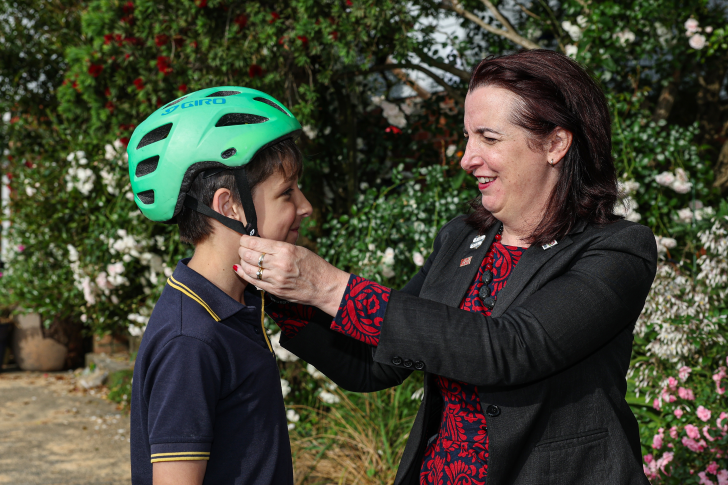
Safety advice for cyclists and drivers
- Always wear a helmet and other safety gear – make sure it fits properly too
- Check your bike’s tyres (for appropriate air pressure), brakes and chain before riding
- Make sure you’ve got bright front and rear lights that work and use them night and day
- See and be seen – where other road users can easily see you
- Communicate with other road users – letting them know when it’s safe to pass and signalling where you’re going to go
- Drivers and cyclists should give each other plenty of space (at least 1.5m)
- Know your limits – be realistic and have a rest when you know you need it