
Martin’s story: A fall, a foot and finding my way back
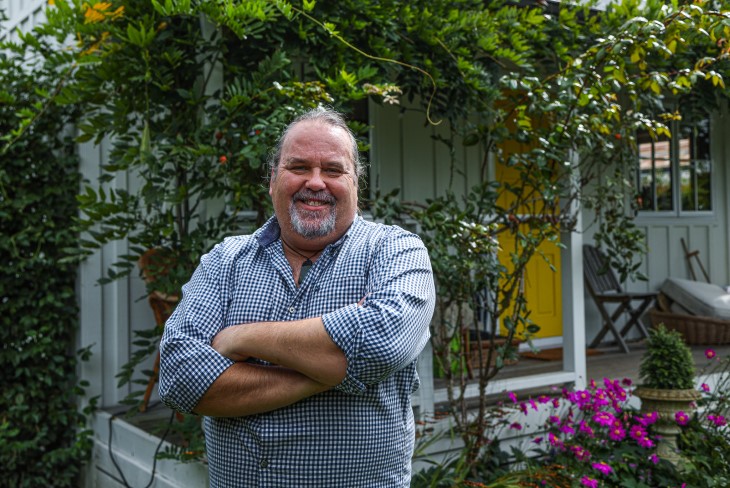
Celebrated chef Martin Bosley nearly lost his foot in a horrific gardening accident. The support of ACC helped him recover but he’s urging others to ‘Have a hmmm’ in the garden this summer.





It was one of those perfect Wairarapa days — the kind that makes you grateful to live in New Zealand. The sun was out, the air smelled faintly of roses and freshly-cut grass, and I had nothing more ambitious planned than trimming a few hedges at my little cottage in Greytown.
After 35 years in kitchens – places filled with sharp knives, boiling stockpots, slippery floors and searing ovens – I’d never had a serious accident. Yet that afternoon, it wasn’t a kitchen that nearly cost me my life. It was a rickety old ladder.
I knew it was dodgy. My neighbour Sue even asked, “You sure that thing’s safe, Boz?” I laughed it off – typical Kiwi bloke confidence. “I’ll be fine,” I said. Those were famous last words.
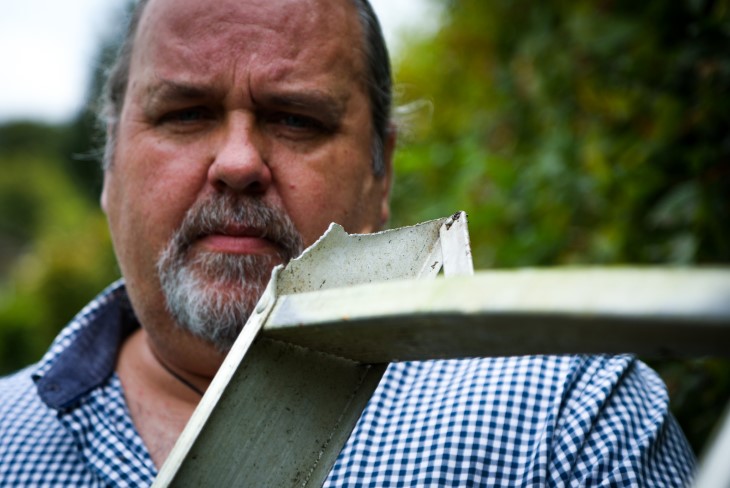
The feet of the ladder gave way as I stood near the top. I remember hearing the creak and thinking, I need to get off this thing. Then suddenly I was on the ground. My leg had snapped over one of the uprights, and the step came down like a guillotine through my foot.
If I hadn’t been wearing my leather gardening boots, I probably wouldn’t have a foot today.
Worse, I was alone. My phone was inside on the kitchen bench. I tried to stand up, but my leg wouldn’t take the weight. Then I saw the blood seeping through the boot – and I realised I was in real trouble.
So I did the only thing I could – I yelled for help. Thankfully, Sue heard me from over the fence. She called an ambulance, but in the Wairarapa, help isn’t just down the road – the nearest one was half an hour away.
Meanwhile, another neighbour was a volunteer firefighter who had just done his first-aid training. He rushed over, wrapped my leg in tea towels, and made a tourniquet. Paramedics later told me he probably saved my life.
‘I had no control over my life’
When I reached hospital, the surgeons were blunt: “We’ll do everything we can to save your foot, but you might wake up without it.”
I lay there wondering whether I’d ever walk again. I also wondered if I would ever cook again.
When I finally woke up, I didn’t dare look. I just wiggled my toes and thought, is that really me or is that just phantom pain? Thankfully, I still had a foot.
But that was only the start.
Physically, the injuries were brutal to come back from – compound fractures of my tibia, fibula and talus, not to mention the deep wound through my ankle.
Mentally, it was worse. Before the fall, my life was a blur of busyness. My phone rang constantly, and I always said yes. That’s who I was: busy, useful, productive.
Suddenly, I was trapped in my own house, reliant on crutches and other people. I had no control over my life, and it broke me.
I’d never struggled with mental health before, but I fell into a deep, dark hole. The physical pain was one thing – but the psychological toll was another thing altogether. There were days I couldn’t face getting out of bed.
‘My experience with ACC changed my life’
ACC was incredible. My experience with them changed my life. They handled everything – surgeries, physio, financial support, counselling and home help.
They even provided a knee scooter so I could get around the house. My friends from overseas couldn’t believe the support I received.
I also had my own amazing support crew – or, as I called them, Boz’s Angels. My mum, my recovery partner, physio, occupational therapist and counsellor. They kept me afloat when I didn’t have the strength to do it myself.
Counselling had a big impact on me. I’d always thought it was something ‘other people’ did. But after one particularly bad day – crying in the carpark of a local restaurant after trying to chop a few potatoes – I realised I wasn’t okay.
That moment made me realise I had work to do. I’d spent my whole career controlling chaos, and suddenly I couldn’t even control my emotions. That’s when the real healing began.
‘Recovery isn’t a race’
It’s been a few years now since the accident and it’s taken time to get back to normal.
ACC helped me build a return-to-work plan, so I didn’t rush back too soon — because I’ve learned that recovery isn’t a race. I had to listen to my body and mind and make sure I was all right.
The accident reminded me how fragile life is – and the need to stop and take a moment to think about what I was doing and if it was safe. I had every chance not to use that ladder. I could’ve listened to my neighbour or that gut feeling. I didn’t.
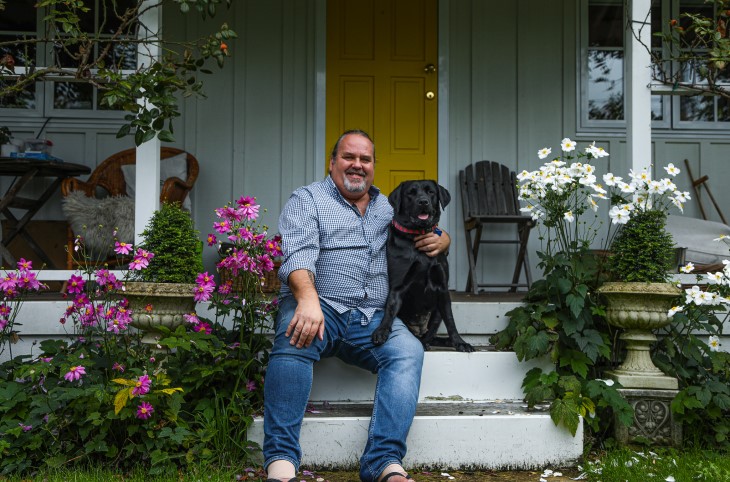
So now I listen. I stop more often. I say no more often. I take my dog for a walk, breathe the air, notice the sun. I’m still the same Martin Bosley – the chef, the foodie, the storyteller — but I’m also someone who knows the busiest life isn’t always the richest one.
Sometimes in life, you have to experience real low points to show you what truly matters.
To anyone doing DIY or gardening this summer, take a moment to consider the risks because one moment can have a lifelong consequence.
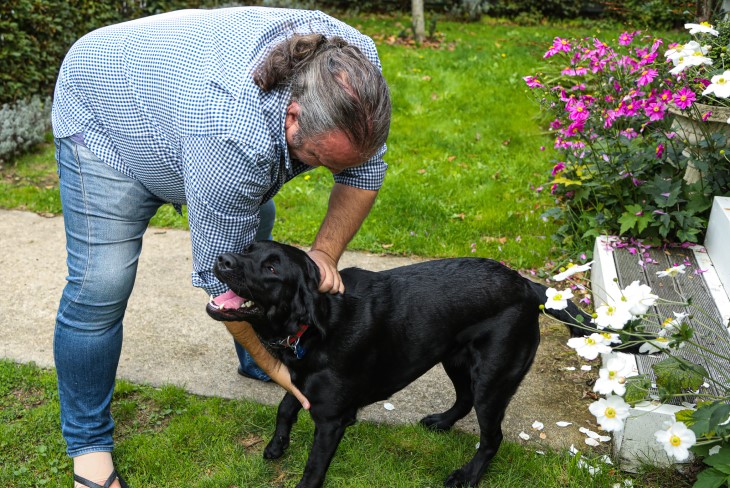
Top tips for gardening safety
- Make sure you have the right safety gear for the job. If you keep it close to your tools you might be more likely to use it.
- If you’re shifting heavy stuff around the garden, break it up into smaller loads each time. Better still, use a wheelbarrow. Keep your back straight and your knees bent while lifting. Check your path is clear so you don’t come a cropper.
- If you need to use a ladder, make sure it’s in good condition. Open it up fully and place it on a level surface. Once you’re up there, avoid over-reaching. It’s easier to move the ladder than take a risk – and never use the top rungs.
- Always use gloves when you’re weeding. You can soften the soil with water for stubborn weeds. Then position your hands as close to the soil as you can, and wiggle as you pull. This should help to loosen the roots and prevent you from straining yourself.
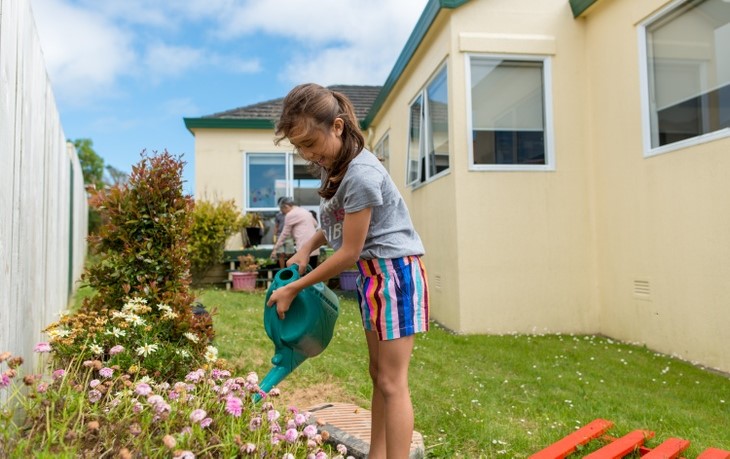
Top tips for DIY safety
- Many accidents in the home happen because people are rushing. Slow down and stop to assess the risks.
- Use all the recommended safety gear and keep it close to your tools so you’re more likely to use it. This includes hard-toed shoes, protective eyewear and earmuffs.
- Keep children in mind. Make sure someone is supervising the kids and keep tools and sharp objects out of reach.
- Find better ways to lift and carry things (like using a wheelbarrow instead of taking the weight yourself).
- Get work off the ground and place it on a table – this reduces the need to bend over.
- Use extension poles and/or step ladders to reduce overhead work and avoid over-extending your neck.
- If you’re getting up on a ladder, make sure it’s strong and in good condition. Use it on a firm, even surface. Avoid the top rungs and keep three points of contact on ladders, for example two feet and a hand. It also pays to avoid over-reaching – get down from the ladder and move it across instead.