
Mitch's story: 'Setbacks don’t define you, how you respond does'
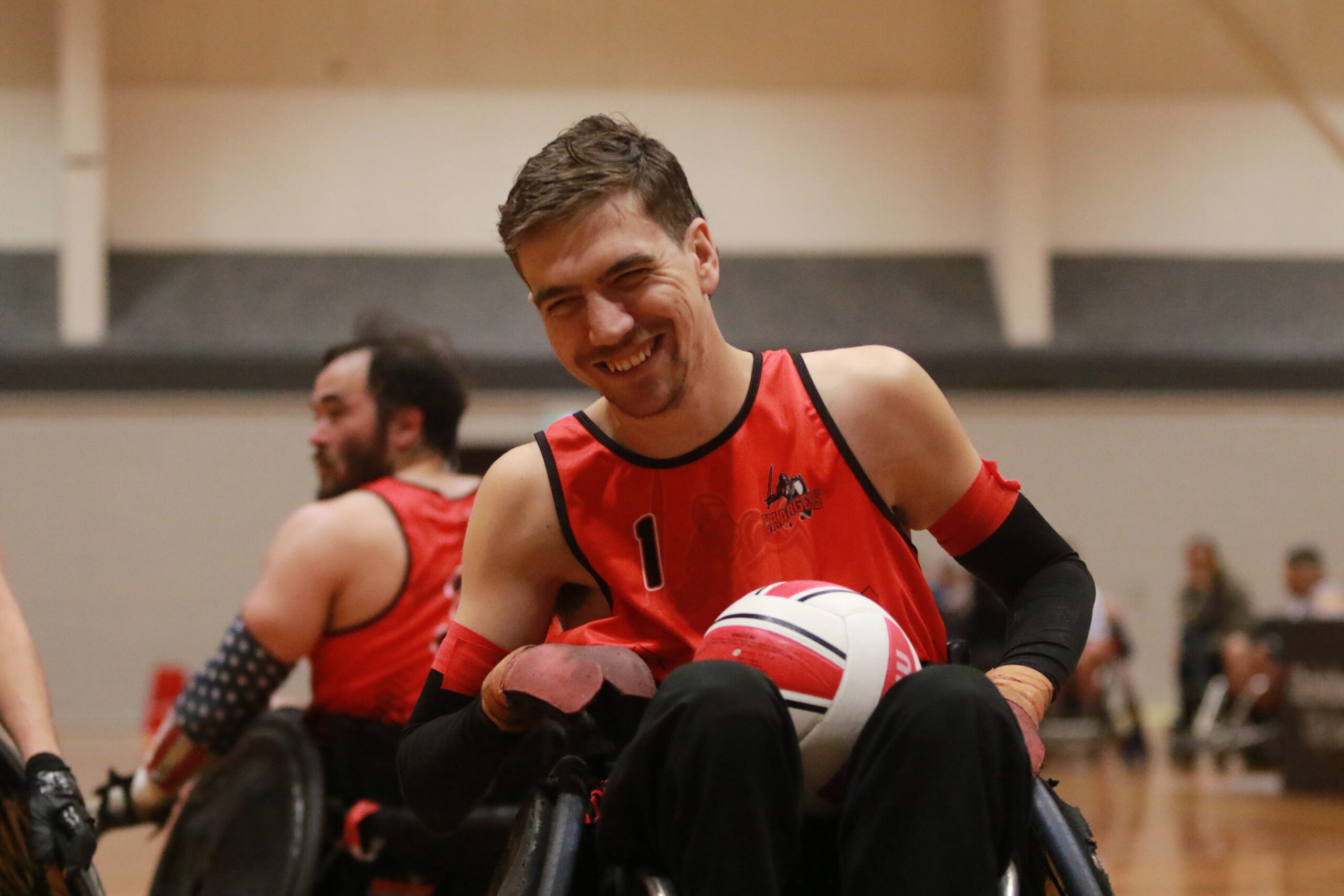
Mitch Simpson became a paraplegic in a car crash, changing his life in a moment. He's now representing New Zealand at the Wheelchair Rugby World Championships in Brazil.





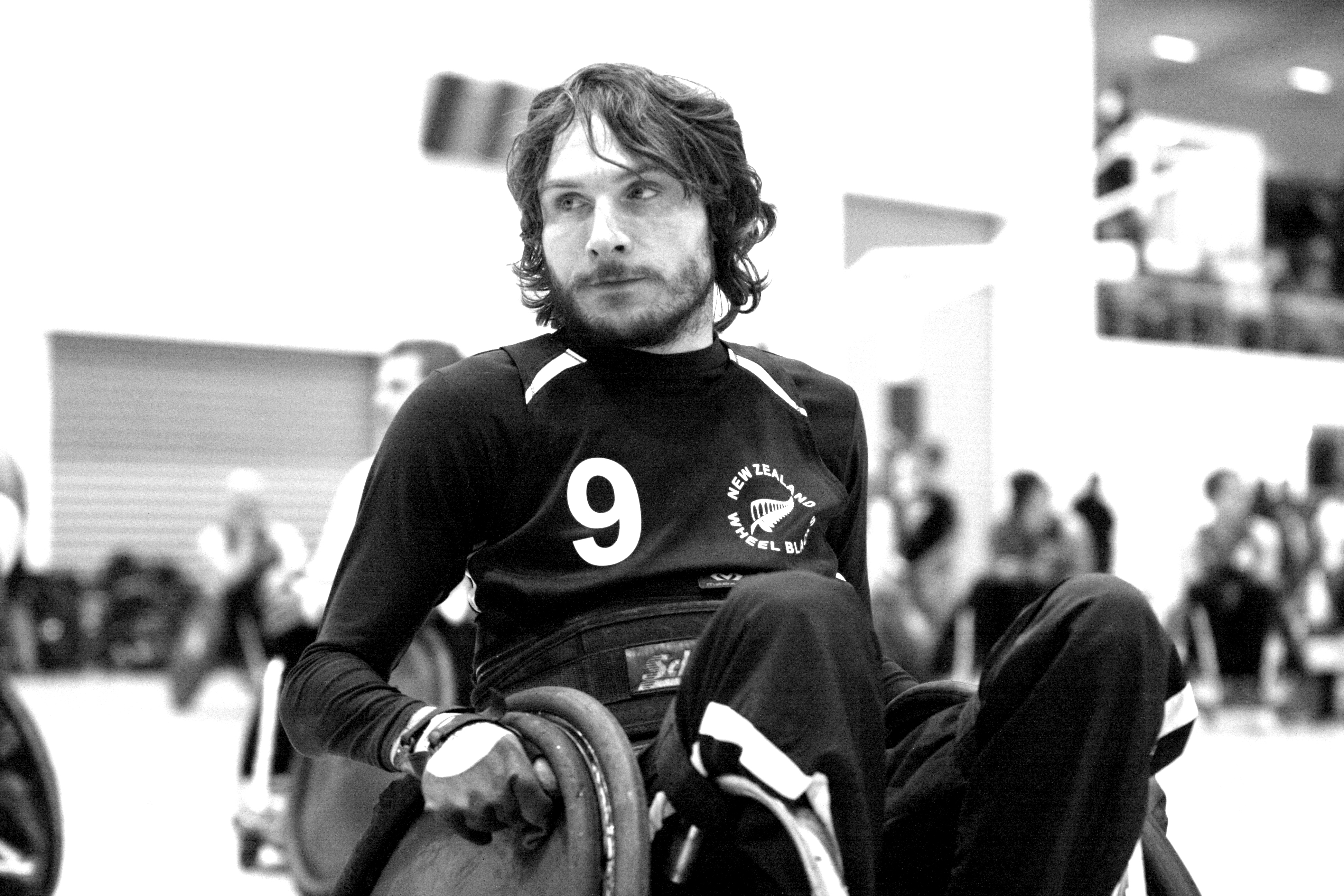
When I rolled onto the court in Bangkok wearing the Silver Fern, I carried far more than a rugby ball. I carried my parents’ pride, my son’s belief, and a decade of lessons about resilience, identity and second chances.
Representing New Zealand at the Asia Oceania Wheelchair Rugby Championship in Thailand last year was never something I imagined during the darkest days of my life, yet there I was — exactly where I was meant to be.
Eleven years earlier, a crash on State Highway 5 between Napier and Taupō shattered my C5 and C6 vertebrae and instantly reshaped my future. That day is a blur, but I was conscious throughout. I remember seeing my cousin in tears at the hospital and telling her, “Don’t worry, it is all going to be OK.”
I spent two months in intensive care, unable to move, breathing through a ventilator, learning to survive before I could think about living again. In those early days, my ambitions were simple: breathe unaided, sit up, hold on.
The hardest part wasn’t the pain. It was seeing my son, Elijah, just one year old, frightened by the tubes and machines around me. He didn’t recognise the man in the bed. But when the tubes came out, he climbed beside me, fell asleep on my chest, and I knew we were going to be OK — not the way I’d planned, but OK all the same.
Wheel Blacks
Chaos with purpose
Before my injury, sport had always been my outlet. I grew up on a dairy farm outside Taupō swimming, playing rugby, racing BMX bikes — anything that kept me moving. After leaving school, I worked fulltime as a dairy farmer, using my body hard and without much thought. Losing that freedom overnight forced me to confront who I was without it.
I wouldn’t be where I am without ACC. From surgeries and equipment to home support, they have always been there. Competing overseas reminded me how privileged we are in New Zealand to have that support. It makes it possible to live the life you love.
Wheelchair rugby entered my life during rehabilitation at the Auckland Spinal Unit. Watching players crash and collide at full speed lit something inside me. It wasn’t just the physicality — it was the strategy, teamwork and shared understanding of adversity. Seeing people with injuries like mine gave me permission to imagine a future that included sport again.
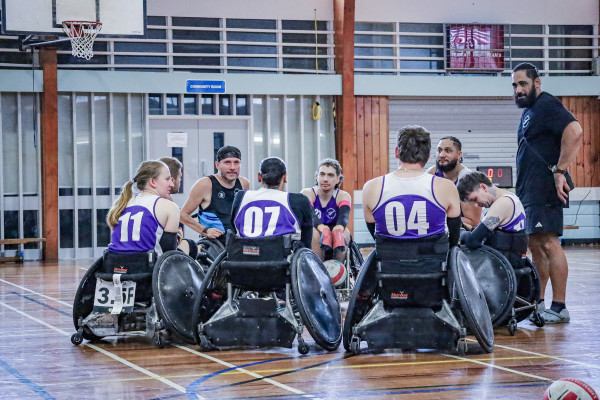
I owe a lot to Gavin Rolton, now head coach of the Wheel Blacks. I met Gav while rehabbing at the spinal unit. He was looking for new players, I didn’t hesitate, and I’ve always appreciated his support.
It took time. Surgeries and recovery delayed my start, and when I finally joined the Waikato wheelchair rugby team in 2018, I pushed like a snail and passed the ball off my knees. But I was hooked. Wheelchair rugby was chaos with purpose. Every movement mattered. Every role counted — especially mine.
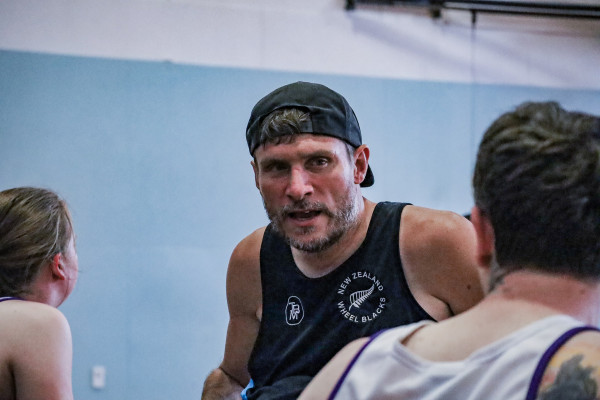
Gavin Rolton, head coach of the Wheel Blacks
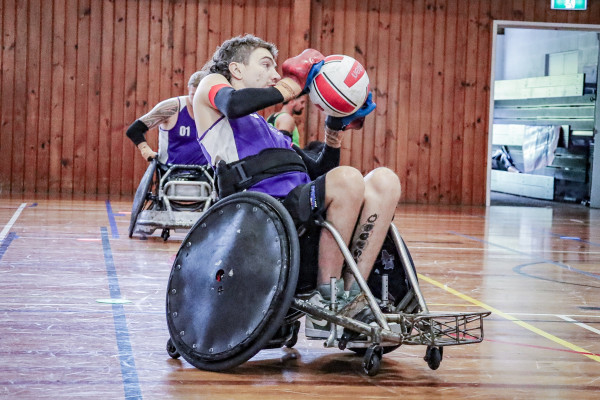
Travel, brotherhood and a second family
As a low point player, my job isn’t to score tries. It is to defend, block, screen and create space for others. It taught me that value isn’t always visible on the scoreboard. Sometimes it’s measured in effort, trust and doing the hard work so someone else can shine.
That mindset came with me when I moved to Christchurch to study agribusiness and accountancy and train with the Christchurch Chargers. Wheelchair rugby became my anchor — training, gym sessions, swimming and video analysis. It gave structure to my days, purpose to my recovery and a community that understood both my limitations and my potential.
Making my debut for the Wheel Blacks in Adelaide was overwhelming. Performing the haka and hearing the anthem stirred something deep. But Bangkok felt different. My parents were in the stands: my dad, Phil, who lives with a degenerative brain disease, and my mum, Gina, who has always been a big part of my story. Elijah, now 11, was old enough to understand what it means to represent your country.
Every time I took the court in Thailand, I felt them with me. I thought about the hospital rooms, the slow starts and the doubt. I thought about the version of myself who once believed his best days were behind him, and realised how wrong he’d been.
Whether we won or lost, my goal was simple: leave everything on the court. Play my role. Honour the jersey. That mindset shapes how I live beyond sport too. As a peer and whānau support worker with the NZ Spinal Trust, I see daily how powerful shared experience can be. Wheelchair rugby didn’t just make me stronger physically — it made me more independent, confident and willing to try.
Sport has given me back more than I lost. It gave me travel, brotherhood and a second family. It showed my son that setbacks don’t define you — how you respond does. And it reminded me that representing New Zealand is not just about performance. It’s about carrying our stories with pride.
Qualifying for the World Championship in Colombia was special. Now I can’t wait to be part of the team heading to Brazil this week. It will be surreal and proud, and I’ll roll onto court grateful for everyone who has supported me on this journey.
2026 World Wheelchair Rugby (WWR) World Championship
- When: August 17 to 23.
- Where: Paralympic Training Centre in São Paulo, Brazil.
- What – 12 nations competing to be World Wheelchair Rugby Champion.
- Pool A: Australia, USA, Canada, New Zealand, Netherlands, Brazil
- Pool B: Japan, Great Britain, France, Germany, Colombia, Denmark