

When in Doubt, Sit Them Out: Concussion module
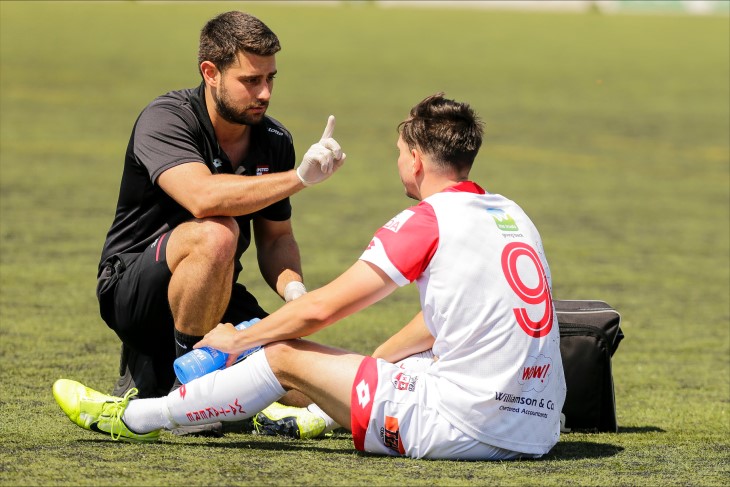
Together with Sport NZ, we've launched a free online course to help adults recognise and respond to concussion.





Every year ACC receives thousands of sport-related concussion claims.
But, more than that go unreported.
Sport NZ Group and ACC have launched a free online course to help adults recognise and respond to concussion.
In 2025, ACC received 12,455 sport concussion-related injury claims. Up until 30 June this year, 7,094 sport concussion-related claims had been lodged with ACC.
Further to this, it’s estimated that around 45 percent of concussions go unreported due to people not recognising symptoms and athletes wanting to continue playing, says ACC injury prevention partner Nat Hardaker.
“Concussions can happen in any play, sport, or active recreation space and it is not always obvious straight away,” says Hardaker.
The When in Doubt, Sit Them Out course takes users through the key steps of recognising the signs of concussion and what to do next.
It covers when to remove someone from play, seeking medical advice, supporting their recovery, and helping them return to sport safely.
The course is a single, trusted source for concussion information, says Hardaker.
“It’s accessible to everyone – it’s free and presented in a way for people to easily absorb and put into practice.”
The information is aimed at coaches, volunteers, teachers, school sport coordinators, parents, whānau - anyone who is supporting young people in sport and active recreation.
Aligned to the National Sport Concussion Guidelines, it’s designed to help more people make informed decisions around concussions, says Hardaker.
“We’re trying to change the culture around concussion in sport.”
If a concussion is suspected in an individual, it is important that they are removed from play immediately and medical attention is sought, says Hardaker.
Individuals need to have a minimum of 21 days away from full competition after sustaining a concussion, she says.
“The course reinforces this message.
“Good early management can improve long-term outcomes and minimise the risk of another concussion or other injury.”
When In Doubt, Sit Them Out is one of the projects being delivered through Sport NZ and ACC’s 10-year partnership to make play, active recreation and sport safer and more accessible.
Course fundamentals
- Recognise a potential concussion from signs and symptoms
- Refer someone to the appropriate medical expert
- Identify red flags that need urgent medical attention (including when to call 111)
- Follow guidelines if no red flags are present
- Feel more confident making safe decisions and supporting an individual’s recovery.
National Concussion Guidelines
The guidelines aim to improve health outcomes and wellbeing for people who play community sport by applying a standardised approach to managing concussion.
- When a player suffers a concussion, they must be symptom-free for 14 days post-injury before a graduated return to play.
- They must complete a minimum period of 21 days away from full competition before returning to play.
- Whilst not mandated, medical clearance is strongly encouraged prior to return to play.
The Five Rs of Concussion Management
- Recognise (the signs and symptoms of concussion)
- Remove (the person from play)
- Refer (to a medical doctor to confirm diagnosis and provide treatment)
- Recover (before returning to school/work and sport)
- Return-to-play (follow the guidelines)
ACC sport concussion numbers
- In 2025, ACC received 12,455 sport concussion-related injuries. These injuries cost $89.9 million to support.
- The top five most prevalent sports last year were Rugby Union (3,261), Soccer (1,259), Cycling (1,056), Rugby League (610), and Scooter (465). Up until 30 June this year, 2,333 Rugby Union concussion claims had been lodged with ACC.
- In 2025, the regions with the highest number of sport concussion-related injury claims were Auckland (3,007), Canterbury (2,076), Wellington (1,229), Otago (1,591), and the Waikato (1,151).
- In 2025, most sport concussion-related claims were received for injured 15-19 year-olds (3,195), followed by 10-14 year-olds (2,678), 20-24-year-olds (1,697), 25-29-year-olds (1,134), and 30-34-year-olds (712).
- Further data is available on our website, here: Our statistics