
Lindy Nelson: Why farming needs its own buddy system
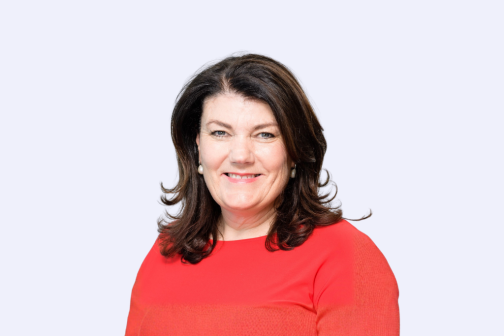
As Safer Farms ambassador, Lindy was instrumental in the formation of the 'Farm without Harm' strategy, a sector-wide plan designed with farmers and supported by ACC. She talks about her passion for the farming community and the need for real change.





The man who became my husband saved my life four hours after I met him.
We were on a dive charter. I was confident, prepared, and certain I had everything under control. I had the remains of a head cold, but I told myself I was fine. I had extra weight on my belt because I was using a new wetsuit, and I thought I had calculated it correctly. My dive buddy, a farmer I had only just met, questioned whether I had too much weight for someone my size. Again, I said I was fine.
Then the conditions changed. We were dropped in the wrong location. I sank faster than I should have. At about 50 feet, I could not equalise and both my eardrums burst. The vertigo was instant and overwhelming. I was disorientated, nauseous and fighting the instinct to vomit. The one thing they teach you in dive school is never remove your regulator. But instinct is powerful, and I pulled it out.
The next involuntary breath could have filled my lungs with water. I was seconds away from drowning.
What saved me was not luck alone. It was an in-built safety system. In diving, you have a buddy. Someone is watching you. Someone can see what you cannot see in the moment. My buddy noticed I was sinking too quickly. He anticipated something had gone wrong, reached out to me, put the regulator back in my mouth, checked my air supply and supported me all the way back to the surface.
That story has stayed with me because it says something important about harm. We can be experienced, capable and well-intentioned, and still miss the way risk is building around us. We can be too close to the task to see it clearly. We can tell ourselves we are fine when the conditions, the equipment, the fatigue or the pressure are quietly stacking up against us.
That is what happens on farms all too often.
Changing the conversation through 'Farm without Harm'
I came into farming through marriage. My first career was nursing, including critical care work and time flying with the Westpac Rescue Helicopter. I had seen the consequences of injury up close. When I became part of the farming sector, what struck me was how normal it seemed that people were killed or seriously injured while producing food.
A couple of years into my marriage, we lost a neighbour doing a routine farming task. Friends lost family members. At first, like many people around me, I thought these were unavoidable incidents. Terrible, but somehow part of farming life.
Over time, that explanation has stopped making sense. These were not one-off, unexplained events. They were connected to the way work was being done: vehicles, livestock, machinery, chemicals, fatigue, pressure and isolation. They were part of a system that had normalised risk.
That is why the ‘Farm Without Harm’ strategy matters so much to me. It is a new way of addressing an old problem. It shifts the focus away from leaving individual farmers to figure it out on their own and asks the sector to do what it does best: come together, share practical knowledge and solve problems collectively.
Our legislation gives individuals and businesses legal responsibilities to identify and manage risk. That is important. But Farm Without Harm is something different. It is the sector’s own response. It is farming leaders supporting farming people to protect each other from preventable physical and mental harm. It is our buddy system.
It also changes the conversation. For many people, the words “health and safety” can prompt an eye roll. They hear paperwork, compliance and someone telling them how to farm. Farm Without Harm is not about that. It is about practical change where the work is done. It is about understanding the critical risks in each farming business and asking: if something goes wrong, how do we fail safely?
That question is especially important for farmers who work alone. Incidents do not only happen to inexperienced people. They happen to highly experienced people who are tired, under pressure, working in changing conditions or doing a job they have done hundreds of times before. The challenge is to get curious about our own systems instead of defaulting to “I’m good, I’m fine.”
On most farms, the critical risks are not a mystery. They are vehicles and mobile plant. They are livestock handling. They are machinery. They are chemicals and airborne risks. They are also the pressures that diminish wellbeing and make good decisions harder. If every farmer identified the critical risks in their own business and managed them well, we would make real progress.
More than funding
The strength of Farm Without Harm is that it is non-judgmental. It meets people where they are. One farmer may decide quad bikes no longer have a place in their system. Another may keep them but add rollover protection, GPS tracking and speed limiters. A one-size-fits-all answer will never fit every farm, but a shared commitment to reducing harm can.
That is why ACC’s partnership with Safer Farms has been so important. It is not just a funding relationship. It brings knowledge, data, campaign experience and a shared commitment to healthier people and less harm. It has helped us do the heavy lifting needed to turn a sector-wide strategy into practical action.
Receiving the National Health and Safety Leadership Award was deeply meaningful. I am not a health and safety expert. I am a practical farmer who cares about this sector and believes we can change the story. To be recognised by people who understand health and safety gave legitimacy to five hard years of work and to the farmer-led approach we have been building.
But the award is not the point. The point is the work still ahead.
New Zealand farmers produce some of the finest food and fibre in the world. What I want is for New Zealand to also be the safest place in the world to farm. That should matter to all of us, not only because we care about our people, but because it is part of our social licence. Consumers should be proud of how their food is produced. They should not have to accept that death, serious injury or long-term harm are part of the cost.
I love farming people. I love their stoicism, their practicality, their ability to solve problems and their deep sense of community. Those qualities are exactly why I believe we can do this. The observer often sees what the participant cannot. If we can make those conversations normal, remove judgment and look out for one another, we can build a farming sector where people fail safely and still come home.
That day in the water, I needed someone beside me. Farming needs the same thing: not more blame, but a practical, collective buddy system that helps us see risk before it becomes tragedy.
ACC work-related agricultural claims
- In 2025 ACC accepted 17,057 work-related agricultural claims which came at a cost of $119 million to help people recover.
- The leading regions for work-related agricultural claims in 2025 were Waikato (2,715 claims), Canterbury (2,490), Hawke’s Bay (1,518) and Southland (1507).
‘Have a Hmmm’ on the Farm
- Look after your back – when you are lifting remember to bend the knees to avoid straining your back or shoulders. Try a smaller load or find a helping hand.
- Pace yourself – it’s never job done on the farm. Work smarter, not harder. Rushing can lead to accidents.
- See it, sort it – if you see a potential hazard on the farm, act sooner rather than later. Fix things as best you can then and there.
- Have a Hmmm at home. Most home injuries happen from slips, trips and falls.