
Little Matters: Prevention expert on new child sexual abuse initiative
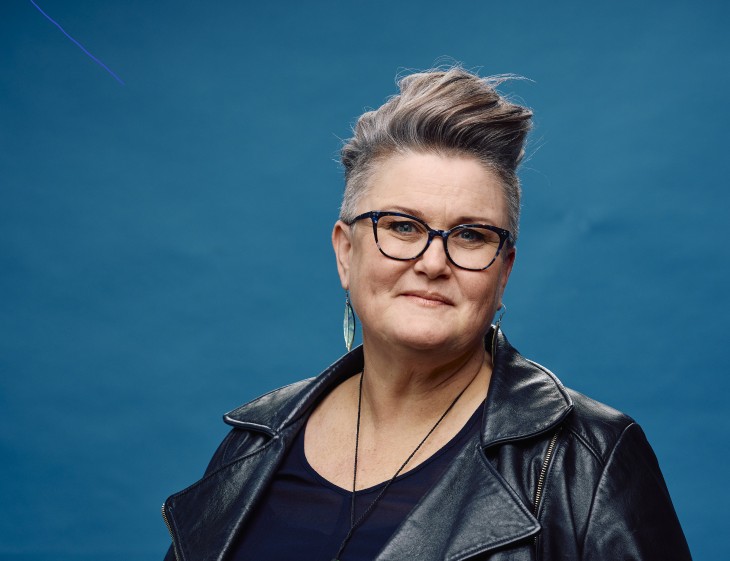
Sexual violence prevention expert Rachel Harrison works with organisations and communities to help prevent harassment and abuse. She’s supported the development of Little Matters, a new ACC initiative aimed at helping to prevent child sexual abuse.





I was seven or eight when someone first told me about sexual abuse but it was at university that I decided I wanted to do something about it.
My partner at the time had experienced sexual abuse as a child.
At 2.30am, the day of an exam, they were awake with flashbacks. If you're not familiar, they involve replaying sensations, smells and experiences, usually from trauma.
I remember us both trying to get back to sleep and realised we were going to be tired for our exams in the morning. I was worried we wouldn’t pass.
I started to think about how many other people in the lecture theatre of about 300 might also have been up in the night with flashbacks from sexual abuse.
I thought, that’s a lot of people who can’t bring their A-game. It was like an ah-ha moment for me.
I realised that, if we can't do our best and can’t bring our full selves to whatever we choose to contribute to the world, then it’s not just our survivors who are suffering.
The whole world is losing out.
‘This has got to stop’
Survivors have done nothing wrong – but they end up dealing with the impact.
I got angry and silently screamed at the universe, ‘This has got to stop’. I promised to whoever was listening that if I could ever do anything to help stop sexual violence then I would.
I finished my degree in sociology, a job came up at Auckland Rape Crisis and I went for it.
That was over 30 years ago and I’ve since worked at a number of different organisations, working across sexual and domestic violence prevention.
I’ve had the opportunity to work with many incredible people. You can’t do prevention without people talking to you about their experiences. That’s been an honour.
I’ve done work within the primary prevention of child sexual abuse, which has involved a lot of work in the community to help prevent sexual harm from happening to children.
Preventing harm before it’s happened
About 10 years ago, I went into business for myself and now work with another preventionist, Melanie Calvesbert, within Prevention Aotearoa.
My scope is a bit broader now and focuses on strengthening systems to create safer environments, free from sexual harassment and abuse.
I’ve been working off and on with ACC as a subject matter expert around child sexual abuse prevention since 2017.
I specialise in primary prevention, so I’m mainly looking at how to prevent harm before it’s happened.
A lot of people are focused on when there’s risk, or when the harm has happened.
I’m more back up at the top of that cliff looking at what research says increases the risk or decreases the risk, how we pull on some of those levers, and how we get spaces, relationships and communities as safe as possible, so harm is less likely to happen.
When I first started in this space, people didn’t know how common child sexual abuse was. Now we have more of an understanding of the problem, but people aren’t sure what to do about it.
That’s why I love Little Matters.
Starting small to keep our kids safer
Little Matters is a new prevention initiative supported by ACC that encourages small actions to help keep our kids safer.
Little Matters provides a national scaffolding for local conversations. I think there’s lots of people who really want to do something, but it feels really hard.
My hope is that our whole country develops a way to talk about this problem, which is practical, grounded and focuses on how we can all do something little to help keep kids safer.
If you’re just looking for a place to start, try using correct words for body parts without embarrassment or shame and making opportunities to check in and listen to kids every day.
I found these an easy starting point with my own daughter. It helped her know that I would listen to her and that nothing was too shameful to talk about.
The prevention of child sexual abuse is one of the key social problems we need to solve when you look at what's underpinning all kinds of social problems and interpersonal violence.
By helping to prevent child sexual abuse, we have a chance to help prevent so many other harms: family violence, sexual violence, drug and alcohol addiction, and mental health issues.
The weight shouldn’t be on our survivors to carry. There are lots of little things we can all do as a society to help prevent sexual abuse.
Things have changed a lot in the time I’ve been doing this work. There isn’t a simple recipe on how to stop this problem, but we’re understanding more all the time.
I also see more and more people having conversations. These are not always easy conversations to have and they’re often not without pain because real people have already been impacted.
We’ve come a long way, and we still have a long way to go.
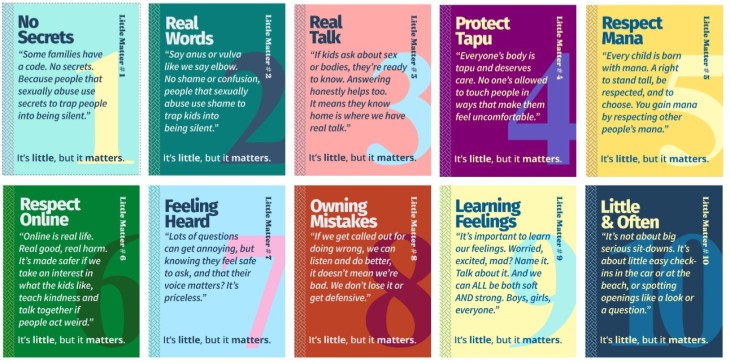
The 10 Little Matters
No Secrets: Some families have a code. No secrets. Because people who sexually abuse use secrets to trap people into being silent.
Real Words: Say anus or vulva like we say elbow. No shame or confusion. People that sexually abuse use shame to trap kids into being silent.
Real Talk: If kids are asking, it’s a sign they’re ready to know something. They can learn in the playground, from a song on the radio...or from home. When we give simple, honest answers, age appropriate of course, it builds trust and shows them home is where we have real talk.
Protect Tapu: Everyone’s body is tapu and deserves care. No one’s allowed to touch people in ways that make them feel uncomfortable.
Respect Mana: Every child is born with mana. A right to stand tall, be respected, and to choose. You gain mana by respecting other people’s mana.
Respect Online: Online is real life, with real good and real harm. So, take an interest in what the kids like, help them to treat people kindly, and if people act weird, talk about it together. That’s how we make it safer.
Feeling Heard: Kids can ask heaps of questions, it can get annoying. But knowing they feel safe to ask, and that their voice matters? It’s priceless.
Owning Mistakes: We can all do wrong. If we get called out on it, we can listen and do better. We don’t need to lose it or get defensive.
Learning Feelings: It’s important to learn our feelings. Worried, excited, mad? Name it. Talk about it. Because when we can name our feelings, it’s easier to tell when something feels wrong. And we can all be both soft and strong. Boys, girls, everyone. No one needs to bottle things up.
Little & Often: It’s not about big serious sit-downs with the kids. It’s about the little everyday stuff. It’s listening to them. It’s about spotting those openings, like a funny look or a question when they see something that upsets them or makes them curious. And, it’s about casual check-ins in the car, at the beach or going for a walk.
Where to access support?
If this topic brings anything up for you, support is available.
If you’re in immediate danger, call 111.
You can contact Safe to Talk on 0800 044 334, text 4334, or webchat.
They’ll listen, support you, and connect you to local services if you want.