
Troy’s story: ‘The second strike brought me back to life’
The life of Troy Hall changed dramatically when he was nearly fatally electrocuted on an orchard. Now he’s keen to urge New Zealanders to live in the present, and to always prioritise safety and wellbeing.





I was 22 when I went up a cherry picker on an avocado orchard in Tauranga and made a decision that changed my life forever. It was late in the day, I wanted to make a phone call but there was no reception down below, so I took the machine up.
At the time, it felt like nothing more than an impulsive choice – one of those little decisions you make without thinking too hard. But that moment put me in the path of 110,000-volt power lines and, in an instant, everything I knew about my life was gone.
The theory is that the power lines ran through the trees and those trees touched my machine, creating an arc flash. It had been raining and I was on my phone. The electricity went through me twice.
I don’t remember the first strike at all – I just blacked out. My father saw the whole thing. He said the first blast sounded like lightning hitting the ground, echoing through the orchard. By the time he raced towards me, the second strike had hit and my whole body was on fire.
The first strike killed me. The second one brought me back. Even now, that feels surreal to say.
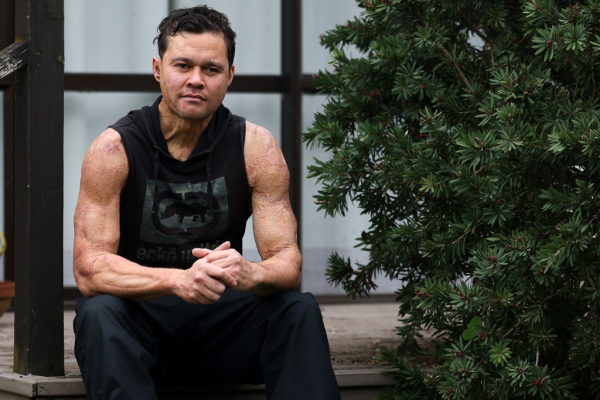
'The pain was relentless’
People sometimes ask what it felt like. During the accident itself, I felt nothing. It was numbness, blackout, then darkness. But the recovery – that was when the pain really began.
Months later, once I came off the heavy medication, the nerve pain arrived in full force. There aren’t many words for it. On a scale of one to 10, it felt like a thousand. It was relentless.
For a long time, I couldn’t walk properly. I couldn’t feed myself. I couldn’t change myself. The most basic parts of being human, the things most of us never think twice about, had to be relearned from scratch.
When I look back now, what stands out most is how long and dark that road was. The first 11 years were brutally hard. There’s no point sugarcoating that. I wanted to give up more times than I can count.
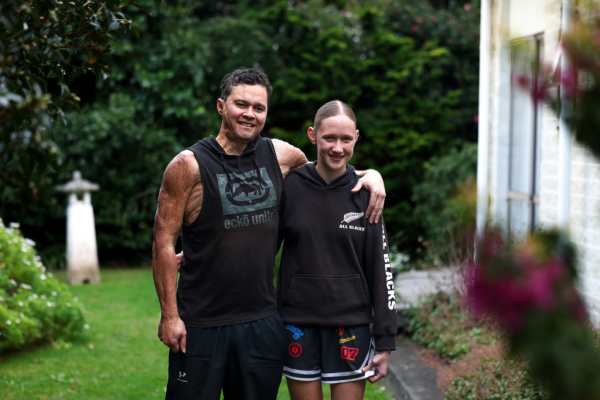
Troy and his daughter
‘My daughter was the turning point’
The biggest turning point came three years after the accident, when I became a dad. My daughter gave me a reason to stay. She became my purpose, my anchor, my biggest achievement.
She’s 12 now, and I can say without hesitation that she’s kept me alive. If I’ve learned anything, it’s that sometimes survival begins with finding just one thing to hold on to. For me, that was my girl.
These days, the word I come back to again and again is gratitude. It took me a long time to get there. For years, I was focused only on what I’d lost. But slowly I began to understand that gratitude was not about pretending everything was fine. It was about recognising what remained.
I can walk again. I can feed myself. I can change myself. I can live independently. I can be there for my daughter. Those things aren’t small – they’re everything. Gratitude doesn’t erase the pain, but it gives me somewhere to put my focus other than the darkness.
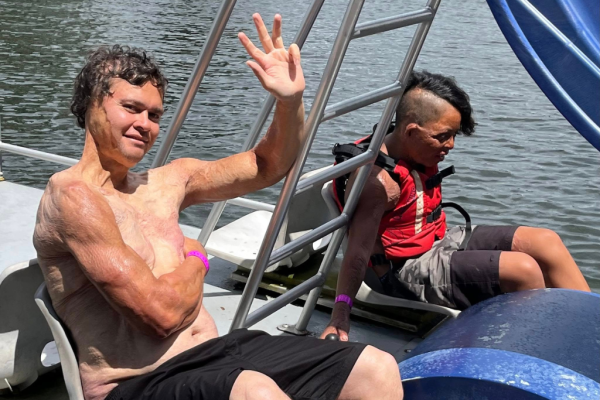
Finding purpose in sharing his story
I’ve worked my way back into life in ways I once thought were impossible. I’m playing sport again – touch, flag football, even masters rugby league. My body doesn’t always agree with me, but I love being back out there.
I’ve also found purpose in speaking to others, sharing my story at conferences and workplaces, especially with young people starting out in dangerous jobs. If there’s one thing I tell them, it’s the need to slow down and think. Don’t take a single moment for granted.
One impulsive decision can change your life forever. I know that because it changed mine. My accident was preventable.
I’ve also learned how important it is to reach out. For too long, I tried to do everything on my own. It took me years before I connected properly with other burn survivors, and I wish I’d done it sooner. There’s something powerful about being in a room with people who understand without you having to explain.
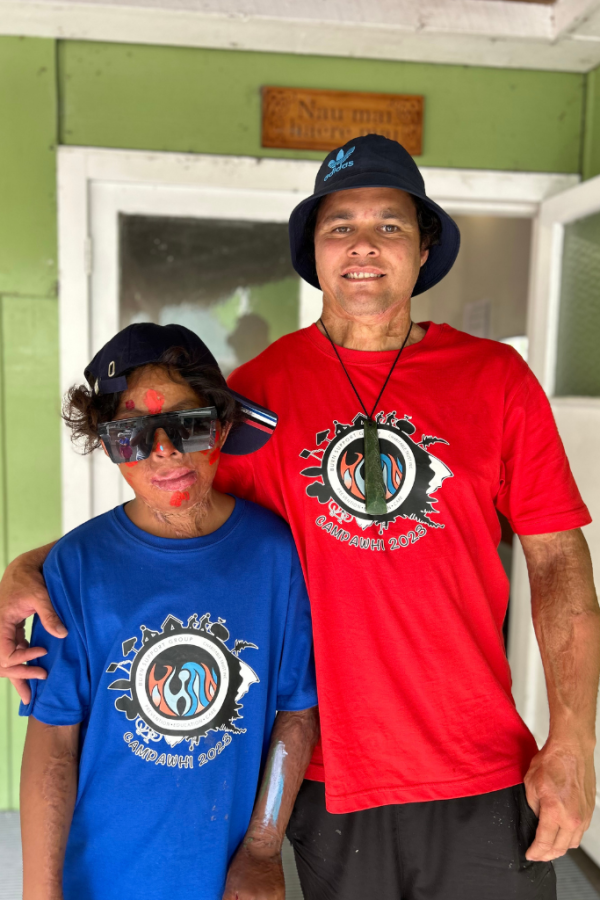
Troy with one of his support people
ACC helps rebuild a life
That connection to others matters and so does support. ACC has been there for me from the very beginning – through treatment, psychologists, prosthetic support and all the practical things that help you rebuild a life.
In a country like New Zealand, we’re lucky to have that support, and I don’t take it lightly.
I still have hard days. I still battle negativity. Recovery is not a straight line, and it doesn’t end just because the scars fade.
But I’m here, I survived something that should have killed me. I fought my way through pain that felt unbearable. I built a life where I can stand on my own two feet, live independently, be a father, play sport, and give something back.
Fifteen years on, I know my story is not really about the day I was electrocuted in an orchard. It’s about everything that came after – the choice, day-by-day, to keep going.
Burns claims by the numbers
- In 2025, ACC accepted more than 20,000 burns-related injury claims which came at a cost of more than $40 million to help people recover.
- The age group with the highest number of burns-related injuries was 0-4 years (2,570), ahead of 35-39 (1,495) and 30-34 (1,476).
- The regions with the highest number of burns-related injury claims in 2025 were Auckland (7,046), Canterbury (2,448), Waikato (2,195) and Wellington (1,573).